

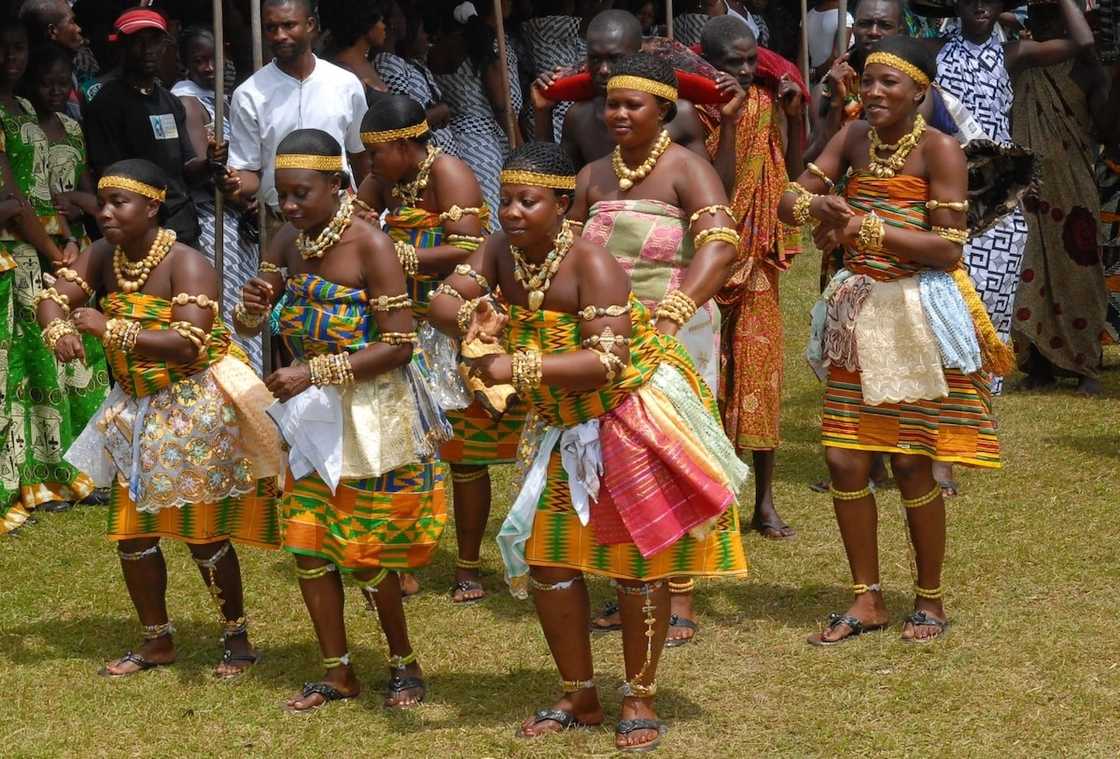
The Ga-Dangbe people, who today form a significant part of Ghana’s cultural tapestry in the Greater Accra region, have a migration story that spans centuries and continents. Understanding where the Ga-Dangbe migrated from offers valuable insights into the complex patterns of movement that shaped West African populations and connects diaspora communities to their ancestral roots.
Multiple Perspectives on Origins
The origins of the Ga-Adangbe people remain a subject of ongoing scholarly debate. Different schools of thought have emerged, each supported by oral traditions, linguistic evidence, and historical analysis.
The Eastern Migration Theory
One prevailing theory suggests that proto-Ga-Adangbe people originated from somewhere east of the Accra plains, while others point to locations far beyond the West African coast. Under the leadership of King Ayi Kushi (Cush), who ruled from 1483 to 1519, the Ga people were led from the east across several states before reaching Accra.
Oral traditions commonly reference origins from the Lake Chad region during the 16th century, followed by a journey down the River Niger to present-day Ghana by the 17th century. The Ga are descended from immigrants who traveled down the Niger River and crossed the Volta during the 17th century.
The Hebrew-Israelite Connection
Among Ga-Dangbe communities, there exists a strong oral tradition connecting their ancestry to ancient Israel. According to these accounts, they migrated from Israel around the 6th century B.C. through Egypt and then to Ethiopia. This narrative describes the Ga-Adangbe as descendants of the biblical tribes of Dan and Gad.
The tradition holds that after the Assyrian invasion of the Northern Kingdom of Israel in 640 B.C., the Ga-Adangbe arrived in North Africa. The story continues with settlement in northern Ethiopia’s Gonder Province, where the Blue Nile originates. This connection is reflected in the title “Nai Wulomo,” meaning “High Priest of the Nile.”
The migration route described in these oral traditions includes extended stays in Ethiopia, movements through Sudan to Lake Chad (where they reportedly remained for approximately 70 years), and then westward through the Benue River region in modern Nigeria, eventually reaching Togo and finally Ghana.
The Journey Through West Africa
Regardless of the exact origin point, there is consensus about certain stages of the Ga-Dangbe migration through West Africa. Some Ga peoples believe they were part of a migration from the south through Uganda, then along the Congo River, westward through Cameroon, Nigeria, Benin, and Togo before arriving in Greater Accra.
Historical accounts mention specific locations along the migration route. The people stopped at various points including Ile-Ife in Nigeria, where cultural and linguistic connections with the Yoruba people developed. The mountainous terrain of present-day Togo received its name from the Ga term describing the up-and-down landscape.
Settlement in the Accra Plains
By the 13th century, the Ga-Adangbe people were settled in the Accra plains. The Ga-speaking peoples organized themselves into six independent towns: Accra, Osu, Labadi, Teshi, Nungua, and Tema. Each town developed its own governance structure centered around a stool, which served as both a ritual object and a symbol of authority.
Migration was not a single event but rather occurred in waves, with various groups of Ga-speakers entering the Accra plains at different times. Some groups came from Akwamu, others from Anecho in Togo, and still others from the Adangme areas to the east.
The Dangme Settlement
The Dangme people, who are linguistically related to the Ga but speak mutually unintelligible dialects, settled along Ghana’s coastal areas. The Dangme groups include the Ada, Kpone, Krobo, Ningo, Osudoku, Prampram, and Shai peoples, all speaking variants of Dangbe within the Kwa branch of the Niger-Congo language family.
Cultural Continuity and Identity
The migration history is preserved not only in formal historical records but also in the living culture of the Ga-Dangbe people. The Homowo festival, one of the most significant celebrations, commemorates the period of hunger during migration and the subsequent harvest and prosperity. Songs, dances, and oral narratives continue to tell the story of displacement, journey, and settlement.
The Ga-Dangbe were originally a sacred federation that united diverse groups through ritual, covenant, and shared devotion to Mawu (God) and the ancestors, rather than a single homogeneous tribe. This federal structure allowed for the incorporation of different migrant groups while maintaining cultural cohesion.
Archaeological and Linguistic Evidence
While oral traditions provide rich narratives, archaeological evidence offers additional perspectives. Archaeological findings indicate that proto-Ga-Adangbe speakers relied on millet and yam cultivation, suggesting an agricultural background that predates their current concentration in coastal fishing communities.
The linguistic connections between Ga-Dangbe languages and other Kwa languages provide clues about migration patterns and cultural contacts. The evolution from farming communities to fishing and trading societies reflects adaptation to the coastal environment of their current homeland.
Implications for the Diaspora
For Ga-Dangbe diaspora communities worldwide, understanding these migration origins provides connection to a heritage that spans continents and millennia. Whether the ancestral homeland lies in ancient Israel, the Lake Chad basin, or the Niger River valley, the story is one of resilience, adaptation, and cultural preservation.
The Ga-Dangbe experience mirrors the broader African diaspora narrative: peoples in motion, cultures in transformation, yet maintaining core identities through ritual, language, and collective memory. Today, with over 70% of Greater Accra’s land owned by Dangme people and significant populations throughout Ghana and neighboring countries, the descendants of these ancient migrants have become integral to Ghana’s national identity.
Conclusion
The question of where the Ga-Dangbe migrated from does not have a single definitive answer, but rather reveals a complex tapestry of movements, mergers, and adaptations. From the Lake Chad region to the Niger River valley, from possible connections to ancient Near Eastern civilizations to documented movements through Nigerian and Togolese territories, the Ga-Dangbe migration story is one of Africa’s great historical journeys.
For diaspora Ghanaians and Ga-Dangbe people worldwide, this history serves as a reminder that migration, adaptation, and cultural synthesis have always been part of the human experience. The Ga-Dangbe people’s successful establishment in the Greater Accra region and their continued cultural vitality demonstrate that knowing where you come from helps chart where you are going.