

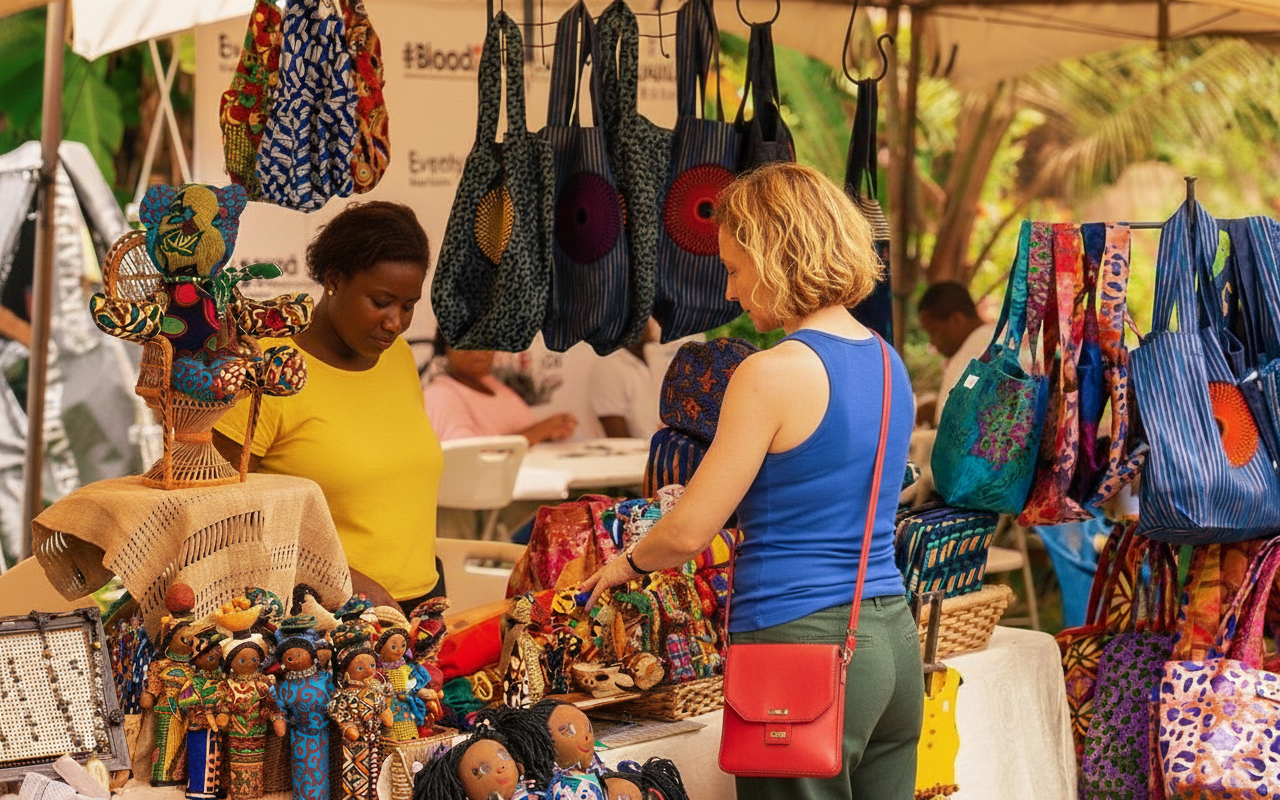
When most diasporans think about reconnecting with Ghanaian culture, they imagine visiting castles, museums, or attending festivals. While these experiences are valuable, there’s another side of Ghana that offers something deeper: traditional craft villages where culture isn’t preserved behind glass but practiced every single day.
These living museums scattered across Ghana provide an authentic window into ancestral traditions that have survived centuries. Unlike tourist attractions where culture is performed, these villages are working communities where artisans create, elders teach, and ancient customs shape daily life. For diasporans seeking meaningful connections to their heritage, these destinations offer hands-on experiences that transform cultural tourism into cultural immersion.
Why Traditional Craft Villages Matter to the Diaspora
Ghana’s craft villages represent the unbroken thread connecting past to present. In these communities, you won’t just observe culture; you’ll participate in it. You can sit with master weavers, watch clay transform into pottery using techniques passed down through generations, and learn why certain patterns carry specific meanings in Ghanaian society.
For African Americans and diasporans worldwide, these villages offer something museums cannot: the chance to learn directly from culture bearers, to understand how traditions adapt while maintaining their essence, and to support communities that keep heritage alive through their daily work.
Bonwire: The Home of Kente Weaving
Located about 20 kilometers from Kumasi in the Ashanti Region, Bonwire village holds a special place in Ghanaian cultural history as the birthplace of kente cloth. Kente weaving has been the primary occupation in Bonwire for over 400 years, with skills and patterns handed down through family lines.
Walking through Bonwire, you’ll hear the rhythmic clacking of wooden looms before you see them. Weavers work outdoors or in open-air workshops, their hands moving with practiced precision as colorful threads transform into intricate patterns. Each design tells a story. The “Adwinasa” pattern means “all motifs are exhausted,” representing creativity and excellence. “Sika Futuro” translates to “gold dust,” symbolizing wealth and royalty.
Master weavers in Bonwire are happy to explain the meaning behind different patterns and colors. They’ll show you how the loom works, demonstrate the weaving process, and share stories about creating special commissions for chiefs and important ceremonies. Many offer hands-on workshops where visitors can try weaving under expert guidance.
The best time to visit is during weekday mornings when most weavers are actively working. While Bonwire has become more tourist-friendly over the years, it remains an authentic working village where kente production continues to be the primary livelihood. You’re buying directly from the artisans who created it, supporting their craft and families.
Sirigu: Where Walls Tell Stories
In the Upper East Region near Bolgatanga, Sirigu village showcases a unique art form that transforms ordinary homes into cultural canvases. Here, women practice the ancient tradition of decorating house walls with intricate geometric patterns using natural pigments made from clay, soot, and plant materials.
Sirigu wall painting isn’t just decoration; it’s a form of storytelling and spiritual protection. Different patterns represent proverbs, historical events, or blessings for the household. The crocodile pattern symbolizes adaptability, the zigzag represents the path of life with its ups and downs, and basket weave patterns honor the importance of women’s work.
What makes Sirigu exceptional is that the tradition nearly disappeared in the 1990s when modern cement and paint became popular. A group of village women revived the practice through the Sirigu Women’s Organisation for Pottery and Art (SWOPA), turning traditional skills into economic opportunity while preserving cultural heritage.
Today, visitors to Sirigu can tour the painted homesteads, learn about the symbolism behind different patterns, and participate in workshops. The women teach visitors how to grind pigments, mix them with water, and apply them to walls using traditional tools. You can also purchase beautiful pottery made using traditional coiling techniques.
Paga: Where Crocodiles Are Sacred
Paga, also in the Upper East Region near the Burkina Faso border, is famous for its sacred crocodile ponds. While this might seem more nature tourism than cultural experience, Paga’s crocodiles are deeply embedded in local spiritual beliefs and traditional religion.
According to Paga tradition, crocodiles and humans have lived together in mutual respect for centuries. The crocodiles are believed to house the souls of royal ancestors, making them sacred and protected. Villagers consider harming a crocodile equivalent to harming a person, and when a crocodile dies, it receives burial rites similar to human funeral customs.
At the Paga Crocodile Pond, local guides will call crocodiles from the water using traditional calls. These guides can place their hands on the crocodiles, and visitors are invited to do the same while the guide holds the crocodile steady. It’s an extraordinary experience that demonstrates the unique relationship between this community and wildlife.
For diasporans interested in African traditional religion and spiritual practices, Paga provides a living example of how these beliefs continue to shape community life and environmental stewardship. The reverence for crocodiles as ancestor spirits illustrates the African worldview that doesn’t separate spiritual from natural worlds.
Odumase Krobo: Beadmaking Capital
In the Eastern Region, Odumase Krobo has been Ghana’s center for traditional beadmaking for over a millennium. The Krobo people perfected techniques for creating glass beads that became valuable trade items long before European contact.
The most distinctive Krobo beads are “bodom” (powder glass beads), made by grinding recycled glass into powder, mixing it with pigments, and firing it in clay molds. Each bead requires multiple steps and precise temperature control using traditional wood-fired kilns.
At the Cedi Bead Factory and other workshops in Odumase Krobo, visitors can watch the entire beadmaking process. Artisans demonstrate grinding glass, creating molds, mixing colors, and firing beads. Many workshops offer classes where you can make your own beads to take home.
The Krobo people have an entire language around beads. Certain bead combinations worn during ceremonies communicate status, celebrate life events, or honor ancestors. The “Aggrey bead,” for example, is a rare chevron bead that holds special significance.
For diasporans, the beadmaking tradition connects to the broader story of West African trade, craftsmanship, and aesthetics that influenced cultures throughout the diaspora. The precision and artistry required for traditional beadmaking challenge stereotypes about African craft as simple or primitive.
Planning Your Craft Village Journey
Visiting traditional craft villages requires different planning than typical tourist destinations. Here are essential tips for making the most of your experience:
Transportation and Access: Most craft villages aren’t on major tourist routes. You’ll likely need private transportation or be prepared for multiple tro-tro (shared minibus) connections. Consider hiring a driver familiar with these regions, or book through a tour company specializing in cultural tourism.
Timing: Visit during working hours on weekdays when artisans are actively working. Many villages slow down during lunch hours (roughly noon to 2 PM) and on Sundays. Festival periods can be excellent times to visit, as communities often showcase special traditions, but they can also be very crowded.
Cultural Etiquette: Ask permission before photographing people or their work. Learn a few words in the local language (Twi in Ashanti Region, Kasem or Frafra in Upper East). Dress modestly, especially in rural communities. Show genuine interest and respect for the artisans’ skills and knowledge.
Supporting Cultural Sustainability
When you visit traditional craft villages, you’re not just observing culture; you’re participating in its survival. Tourism provides crucial income that makes traditional skills economically viable for younger generations to learn. Without this economic incentive, many crafts would disappear as young people migrate to cities seeking better opportunities.
Sustainable cultural tourism requires conscious choices. Buy directly from artisans rather than middlemen when possible. Pay fair prices that reflect the skill and time involved in traditional crafts. Consider commissioning custom pieces, which provide better income for artisans than selling pre-made items.
If you have specific skills (photography, business, marketing, education), consider how you might support these communities beyond your visit. Many craft villages welcome diasporans who want to volunteer or establish longer-term partnerships.
Combining Craft Villages with Your Heritage Journey
Traditional craft villages complement other diaspora experiences in Ghana beautifully. After visiting castles and slave trade sites on the coast, the craft villages show the cultures and traditions that slavery couldn’t erase. They represent resilience and continuity.
Consider creating an itinerary that pairs craft villages with related urban experiences. Visit the National Museum in Accra before traveling to Bonwire to understand kente’s historical significance. Explore the Kumasi Cultural Centre before venturing to nearby craft villages. This combination of curatorial and lived culture deepens your understanding significantly.
Conclusion
Traditional craft villages offer diasporans something uniquely valuable: the opportunity to experience Ghanaian culture as it’s lived, not as it’s displayed. In these communities, you’ll find the authentic connections to heritage that so many diasporans seek.
You won’t just see beautiful objects; you’ll understand the knowledge systems, community structures, and worldviews that produce them. You’ll meet people whose daily lives embody cultural continuity across centuries. You’ll support communities that keep traditions alive through their skilled hands and creative spirits.
These villages remind us that African culture isn’t frozen in the past or confined to museums. It’s alive, evolving, and practiced by real communities who welcome diasporans ready to engage respectfully and meaningfully with their heritage.
Plan your visit to Ghana’s craft villages not as a side trip but as a central part of your heritage journey. The connections you make and the understanding you gain will transform how you relate to your Ghanaian roots.
For assistance planning cultural tours to traditional craft villages or any aspect of your Ghana journey, Contact us here. We specialize in creating meaningful heritage experiences that connect you with the culture of Ghana.