
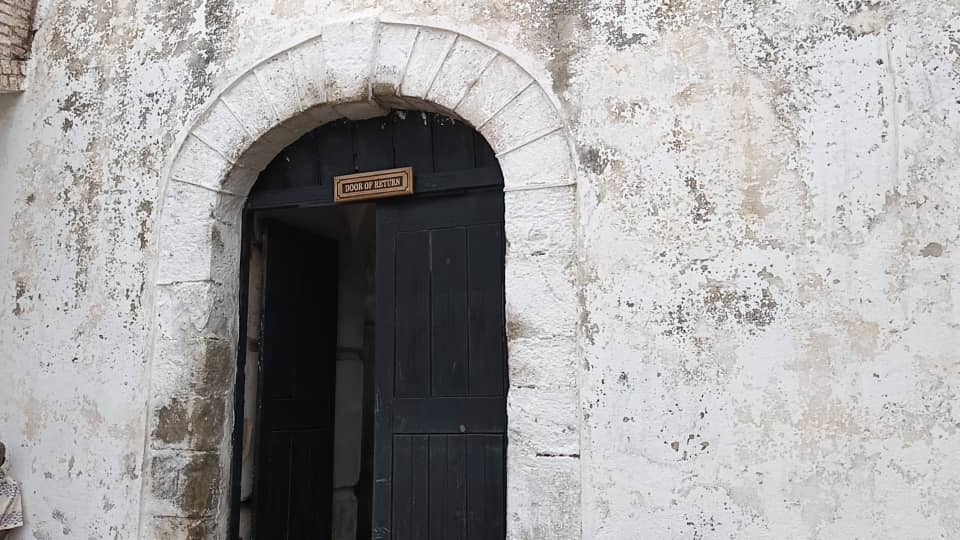
The “Door of No Return” stands as one of Africa’s most powerful symbols of the transatlantic slave trade’s devastating legacy. Located in Ghana’s historic slave castles, these doorways represent the final threshold millions of enslaved Africans crossed before being forced onto ships bound for the Americas. For descendants of the diaspora, visiting these sites is a deeply emotional pilgrimage that combines historical confrontation, cultural connection, and ancestral remembrance.
What Is the Door of No Return?
The Door of No Return refers to a series of narrow passageways located in several West African slave fortresses, most notably at Cape Coast Castle and Elmina Castle (also known as St. George’s Castle) in Ghana. These doors were the final exit points through which enslaved Africans passed after weeks or months of captivity, before being loaded onto small boats that transported them to larger slave ships waiting at sea.
Historical Significance
The Final Threshold: For the countless individuals who passed through these doors in chains, it marked their last physical connection to African soil. The name “Door of No Return” symbolizes the permanent and brutal severing of ties to homeland, family, culture, and identity.
Scale of the Trade: Between the 16th and 19th centuries, approximately 12 to 12.8 million Africans were shipped across the Atlantic during the transatlantic slave trade. An estimated 10-11 million survived the Middle Passage, while millions more perished during capture, the march to the coast, imprisonment in the castles, or during the ocean voyage.
Horrific Conditions: Before being forced through the doors, enslaved people endured unimaginable suffering in the castle dungeons. They were held in cramped, dark, poorly ventilated spaces sometimes 200 people packed into rooms as small as 15 by 20 feet with little food or water, no sanitation, and disease rampant. Some dungeons were so overcrowded and filthy that many captives suffocated or died from illness before ships even arrived. Women and girls faced additional horrors, including systematic sexual assault by European officers and governors.
The Historic Castles
Elmina Castle
Built by the Portuguese in 1482, Elmina Castle is the oldest European structure still standing in sub-Saharan Africa. Originally constructed as a trading post for gold, it was later converted into a major slave depot when the Dutch seized control in 1637. The Dutch substantially expanded the castle, adding a marketplace where enslaved people were auctioned. Historical records indicate that during the height of the trade, approximately 30,000 enslaved Africans passed through Elmina annually until the Dutch abolished their participation in the slave trade in 1814.
Cape Coast Castle
Originally built as a timber fort by Swedish traders in 1653, Cape Coast Castle fell under British control in 1664 and became one of Britain’s principal slave trading centers along the West African coast. The British extensively renovated and expanded the fortress specifically for the slave trade. Unlike Elmina’s single-person door, Cape Coast’s Door of No Return was designed to accommodate larger groups, reflecting the industrial scale of British slave trading operations.
Both castles are now UNESCO World Heritage Sites and serve as museums and memorial spaces.
The Door of Return
In a powerful gesture of reconciliation and healing, the other side of the Door of No Return at Cape Coast Castle has been renamed the “Door of Return.” This symbolizes an invitation for the African diaspora to reconnect with their ancestral homeland. The United Nations declared 2015-2024 the International Decade for People of African Descent, and the Door of Return represents a spiritual homecoming for descendants seeking to honor their ancestors and reclaim their heritage.
In Literature and Culture
The historical significance of these sites has inspired numerous creative works. Newbery Medal winner Kwame Alexander’s young adult novel The Door of No Return (2022) tells the story of 11-year-old Kofi in 1860s Ghana, whose life is forever changed by the slave trade. Written in verse, the novel aims to portray the richness and wholeness of African life before the tragedy of enslavement, reminding readers that the story of African people did not begin with slavery.
The castles have become major destinations for heritage tourism, particularly for African Americans and other diaspora members seeking to connect with their roots and memorialize their ancestors. Many visitors describe the experience as transformative and spiritually significant, though emotionally overwhelming.
Planning Your Visit
Guided Tours: Professional guided tours are highly recommended and essential for understanding the full historical context. Knowledgeable guides bring the history to life while maintaining the solemnity these sites deserve.
What to Expect: Tours typically last 1-2 hours and include visits to the dungeons, the Door of No Return, governors’ quarters, condemned cells, and museums with artifacts and exhibitions. Be prepared for an emotionally intense experience as many visitors shed tears while touring the facilities.
Combine with Other Experiences: Enhance your understanding by visiting the on-site museums, attending local storytelling sessions, and exploring the towns of Elmina and Cape Coast.
Admission: There is an entrance fee for both castles. Some diaspora visitors have expressed concerns about pricing, but many also recognize that these fees support preservation efforts for future generations.
Tips for Diaspora Travelers
Dress Respectfully: These are sacred sites. Wear modest, respectful clothing, especially in the dungeons and solemn areas.
Allow Time for Reflection: Many visitors bring journals for personal reflection or hold private ceremonies to honor their ancestors. Take your time processing the experience.
Engage with Guides: Local tour guides offer invaluable context-rich narratives that go beyond basic historical facts. Don’t hesitate to ask questions.
Prepare Emotionally: This visit can be overwhelming and triggering. Consider traveling with supportive companions and allow yourself space to feel whatever emotions arise.
Photography: Be mindful and respectful when taking photos. Some visitors feel uncomfortable with photography in the dungeons.
Extended Learning: Visit during commemorative events, or explore other historic sites along Ghana’s coast, including Fort Christiansborg (Osu Castle), Ussher Fort, and Fort James.
Conclusion
Visiting the Door of No Return transcends tourism as it is a pilgrimage of remembrance, reckoning, and reconnection. These castles stand as powerful reminders of humanity’s capacity for cruelty, but also of the resilience and strength of those who survived. For diaspora members, walking through the Door of Return offers a profound opportunity to honor ancestors, confront painful history, and reclaim cultural identity.
Ghana’s slave castles serve as essential sites of memory in our collective human story as painful chapters that must never be forgotten. As we walk through these doors today, we carry the responsibility to remember, to educate, and to ensure that such atrocities are never repeated.