
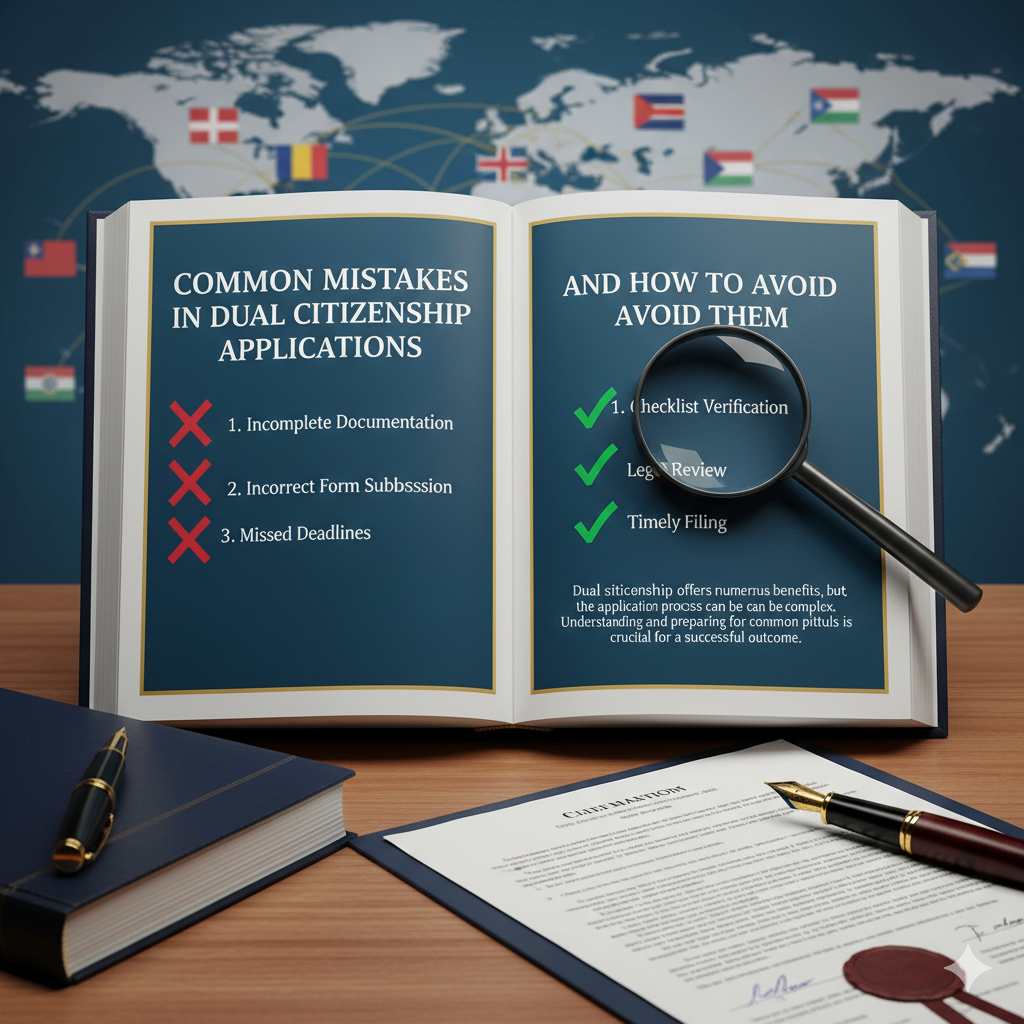
Applying for dual citizenship ranks among the most meaningful decisions you’ll make. It’s also surprisingly easy to get wrong.
Delays and rejections plague many applicants, often for entirely preventable reasons. The difference between success and frustration? Preparation, accurate information, and learning from others who’ve navigated this path.
The Ghana Diaspora Dialogue Webinar this December 2025 offers expert guidance through every step of the citizenship process. Start here.
We’ve compiled the most common, yet avoidable, mistakes that cause delays, rejections, or even revocation of your hard-won status. Read on to make sure your journey to dual nationality is a success, not a saga.
The Paperwork Pitfalls: Incomplete or Inaccurate Files
The most frequent cause of denial is simply getting the documents wrong. The immigration process is highly administrative, and the smallest error can stop your application cold.
- Incomplete or Outdated Forms: Submitting an application that is missing sections, has inconsistent answers, or uses an old version of the required form is a guaranteed return-to-sender.
- The Translation Trap: If any required document (like a birth or marriage certificate) is not in the country’s official language, you must provide a certified translation. Skipping this step or using a non-certified translator is a common error.
- Missing Proof of Financial Good Standing: Many pathways require proof of financial stability and “good moral character.” Failing to provide evidence of up-to-date tax filings or, in cases of parents, child support payments, is a major red flag.
The Residency Requirements
This is where the fine print can trip up even the most careful applicants, especially when using a naturalization route that depends on your prior resident status.
- Continuous Residency Violations: Most countries require you to demonstrate “continuous residency” for a specific period (e.g., 3 or 5 years) before applying for citizenship. Extended absences often more than six months can “break” this continuity, resetting your clock to zero.
- Inaccurate Physical Presence Calculation: Beyond continuous residency, you often need to prove you were physically present in the country for a minimum number of days. Mistakes in tracking your travel dates can lead to significant delays or denial.
- Ignoring Local Laws (Even Minor Ones): A residency period is a probationary period. Criminal history, even for seemingly minor offenses like multiple DUIs, can disqualify you based on a lack of “good moral character.” Always disclose and address any legal issues upfront with an expert.
The Ethical Errors:
The quickest way to get your application denied and possibly face severe penalties is through dishonesty.
- Misrepresentation and Fraud: Lying or providing false information on your application, even about something you think is minor, is grounds for permanent rejection. This includes omitting a prior criminal conviction, exaggerating your income, or falsely claiming your place of birth.
- Failing to Disclose: If you had a previous application denied, or were even investigated for a legal matter, you are almost always required to disclose it. Hiding information will be viewed as a lack of good moral character.
Unlock Your Path: Join Our Exclusive Webinar
The journey from a resident permit to a dual passport is a proven, strategic path, but it requires precision. Don’t leave your future to chance!
Join our specialized webinar where we will break down the exact steps, common traps, and insider strategies to move from being a permanent resident to a dual citizen.
Webinar Title: Acquiring Dual Citizenship: The Resident Permit Way
What you will learn:
- Strategic Planning: How to use your current resident permit status to meet the continuous residency requirements flawlessly.
- Paperwork Perfection: A checklist to ensure your documents, translations, and financial proofs are 100% compliant.
- Avoiding the Residency Clock Reset: Expert advice on managing travel and absences to maintain your eligibility.
- Case Studies: Real-world examples of successful and unsuccessful applications.
Get It Right the First Time
The Ghana Diaspora Dialogue Webinar this December connects you directly with experts who guide applicants through citizenship successfully.
Ready to turn your resident permit into a second passport?
Dual citizenship means being legally recognized as a citizen of two countries at the same time. You can enjoy rights and privileges in both nations.
Most delays or rejections happen because of missing documents, old forms, or incomplete information. Always double-check your paperwork before submitting.
Some countries require you to live there for a specific number of years before applying for citizenship. Long absences can affect your eligibility.
The webinar explains the steps for applying for dual citizenship, how to prepare your documents, and how to avoid common mistakes.